Helidecks are critical safety interfaces between offshore structures and aviation operations. When visibility drops, especially during night operations, markings and lighting systems become essential for safe helicopter landings. Ensuring these elements meet regulatory standards is not just best practice; it’s a compliance requirement.
In this article, we break down the technical aspects of helideck lighting and markings, highlight common inspection failures, and explain how operators can stay aligned CAP 437.
Why Helideck Lighting and Markings Matter
Helideck lighting and surface markings provide pilots with crucial visual cues during approach, landing, and take-off. In offshore environments, where weather conditions can change rapidly and visibility is often compromised, these systems play a direct role in preventing incidents.
Proper helideck lighting standards and helideck markings compliance ensure:
- Clear identification of landing areas
- Safe approach guidance
- Reduced risk of misjudgement during night operations
- Alignment with aviation authority requirements
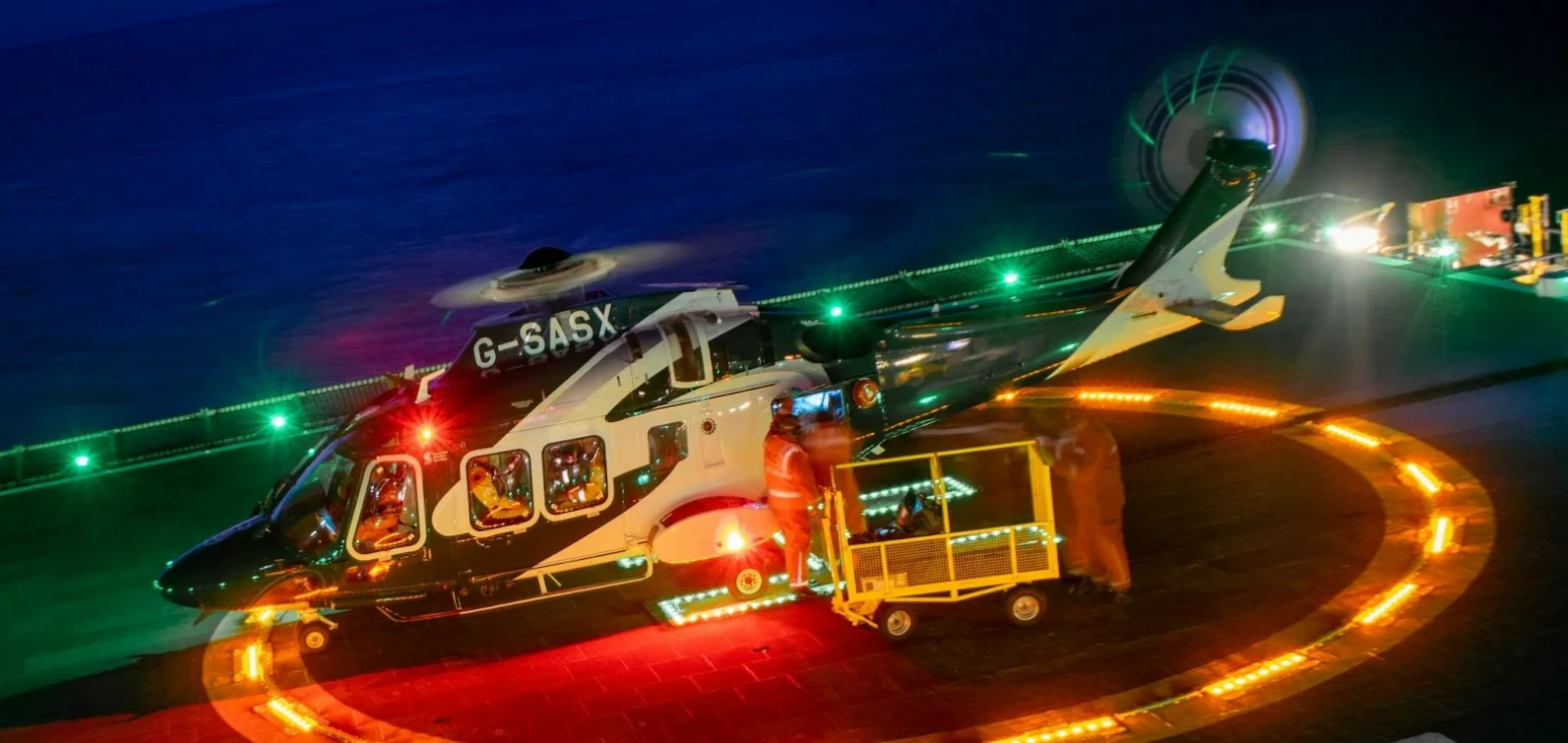
Key Components of Helideck Lighting Systems
1. Touchdown/Position Marking (TD/PM) & H lights (also known as Circle & H lights)
C-H lights illuminate the touchdown and lift-off area (TLOF), ensuring pilots can accurately judge height & position.
Technical considerations include:
- Even light distribution without glare
- Adequate luminance levels as defined by CAP 437
- Compatibility with pilot night vision (avoiding excessive brightness or dazzle)
Modern systems use LED technology for energy efficiency and longevity, but they must still meet strict photometric requirements.
Modern LED lens aid pilots on flight path approach indication
2. Perimeter Lighting
Perimeter lights define the boundaries of the helideck, providing a clear outline during low visibility or night operations.
Key compliance points:
- Lights must be uniformly spaced
- Colour specifications (typically green) must be adhered to
- Light intensity must remain within prescribed limits
Incorrect spacing or inconsistent brightness is a common issue found during inspections.
3. HMS lighting
Helideck Movement System lighting indicate to helicopter crews on the safe, or unsafe, movement condition of a helideck on approach or if the deck motion changes whilst the helicopter is on deck.
Requirements include:
- Colour and frequency changes depending on movement
- Sufficient visibility to the pilots
- Linked to F&G alarm system
These lights must be positioned to avoid confusion or misinterpretation during critical landing phases.
CAP 437: The Compliance Benchmark
CAP 437 is the UK Civil Aviation Authority’s primary guidance document for offshore helicopter landing areas. It outlines detailed requirements for helideck design, operation, lighting, and markings.
For lighting and markings, CAP 437 specifies:
- Minimum and maximum light intensity levels
- Approved colour schemes and configurations
- Marking dimensions and placement (e.g., “H” marking, touchdown circle)
- Maintenance and inspection expectations
Non-compliances against CAP 437 standards can lead to operational restrictions or safety risks.
Common Inspection Failures
Despite clear guidelines, helideck inspections frequently reveal recurring issues. Understanding these can help operators proactively address risks.
Lighting-Related Failures
- Uneven or insufficient light output
- Glare affecting pilot visibility
- Non-compliant colour or intensity levels
- Faulty or non-operational fixtures
- Unserviceable LED’s
Marking-Related Failures
- Faded, contaminated or worn deck markings
- Incorrect dimensions or proportions
- Poor contrast with the deck surface
- Obstructions affecting visibility
System-Level Issues
- Lack of routine maintenance records
- Improper installation of lighting systems
- Failure to update systems in line with revised standards
These issues not only compromise safety but can also delay certification or result in costly corrective actions.
Achieving and Maintaining Compliance
To meet helideck lighting standards and ensure helideck markings compliance, operators should:
- Conduct regular inspections and maintenance
- Use certified lighting systems designed for offshore environments
- Maintain accurate documentation of maintenance and upgrades
- Stay updated with revisions to CAP 437 and other relevant standards
A proactive approach reduces risk, improves operational efficiency, and ensures readiness for audits.
Final Thoughts
Helideck lighting and markings are not static installations; they require ongoing attention, maintenance, and validation. With increasing regulatory scrutiny and operational demands, ensuring full compliance is more important than ever.